
The Coconut: What Happens When Sailors Get to Name Things
The coconut began life in everyday Sanskrit as Nārikela, which sounds like a great branding name for a vegan coconut water.
It was also called Śrīphala in Sanskrit holy texts — “the fruit of prosperity” or even the better, more poetic translation — "The tree that gives all that is necessary for living".
Not being a Hindu priest but more grounded in the real world, another translation of the Sanskrit could also be: "this thing pays the rent".
It fed people, watered them, clothed them, roofed their houses, tied their boats together, and occasionally served as a blunt instrument.
In short, it was the kind of plant ancient civilisations loved because it meant they didn’t immediately starve to death or die from exposure.
Naturally, this made it a hit with traders.
Arab merchants, who actually knew what they were doing at sea long before Europeans discovered compasses weren’t witchcraft, sensibly called it jawz al-hind — “the Indian nut.”Practical, descriptive, no nonsense. Exactly the sort of name that would not survive contact with Europe.
Enter the Portuguese.
The Portuguese arrived in the Indian Ocean in the late 1400s with cannons, a burning desire to monopolise spices, and absolutely no intention of learning local languages.
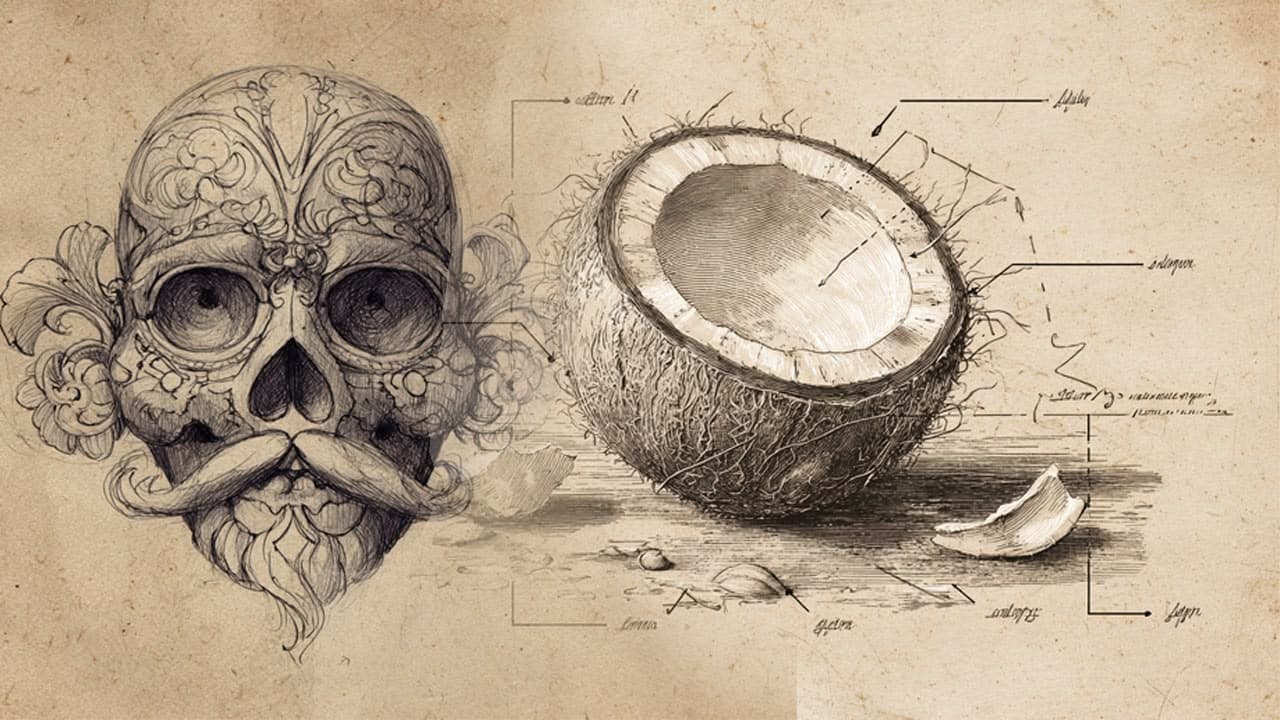
They looked at the coconut and noticed three things: it was hard, it floated, and it appeared to be staring at them.
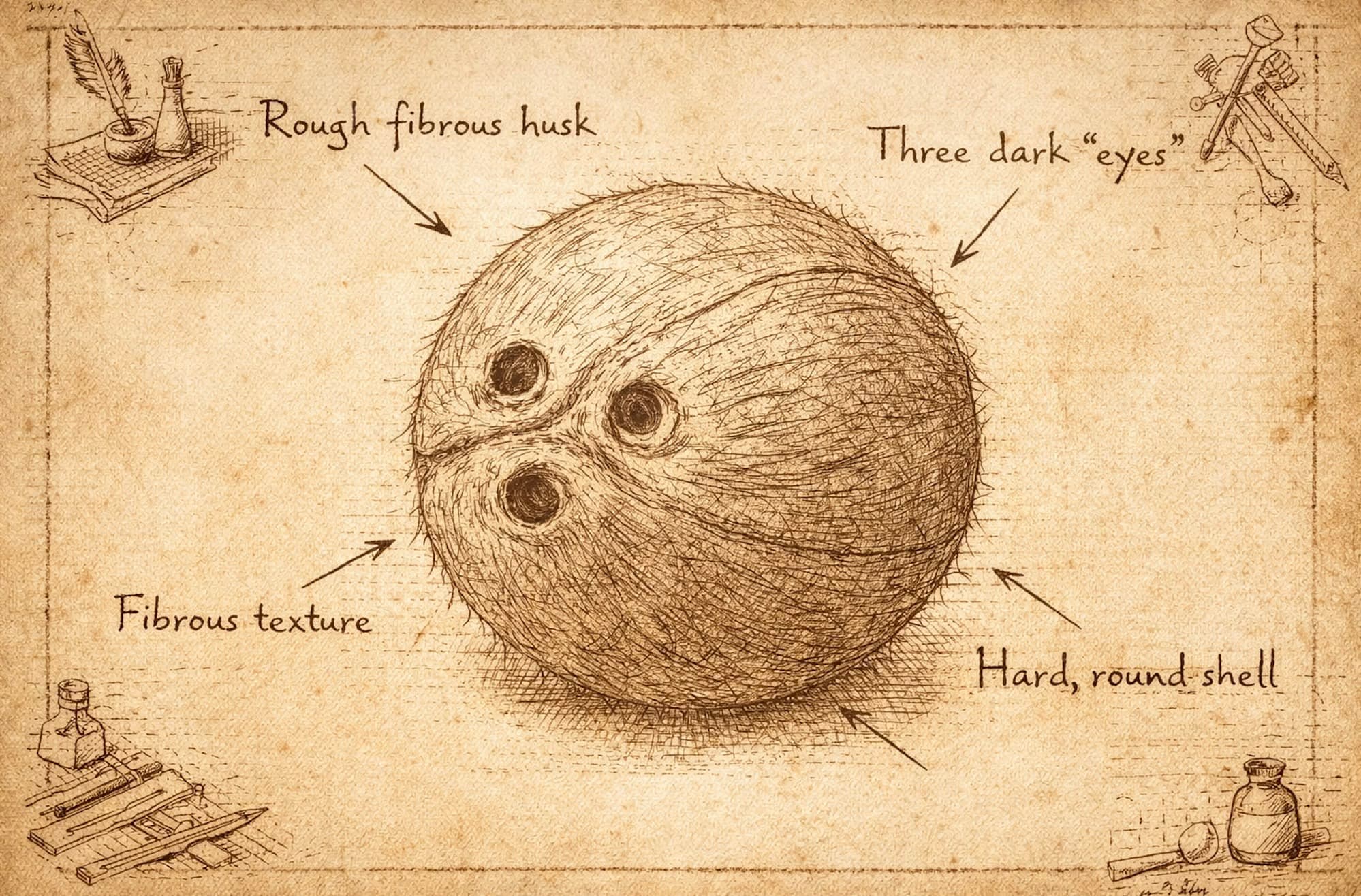
Those three dark holes on the shell?
To a Portuguese sailor they looked like a face — specifically the face of côco, a folklore bogeyman used to scare small children.

Imagine discovering a new food and immediately deciding it resembles a haunted skull. This tells you a great deal about Portuguese childhood.
Unlike modern day kids who get the Disney version of Coco -

Kids were tougher back then . . . but I digress.
So instead of adopting the perfectly good Indian or Arabic names, the Portuguese essentially called it the côco nut — essentially, “the creepy face nut.” .
By the time the English sailors showed up in the region — late, damp, riddled with scurvy and more into creating sea shanties than botanical taxonomy — they decided the Portuguese word was exotic enough and left it at that.
No Sanskrit poetry. No sacred symbolism. Just a tropical fruit permanently branded as something that looks like it might haunt your dreams at night.
Which is exactly how native populations felt when a foreign sailing ship showed up in port with men in woollen pants, dumb hats, and an enthusiasm for cannons.
It's not just scurvy impaired sailors that can't be bothered learning names for things, remember that we still call Bangkok “Bangkok” because that’s what it was called on 17th century maps, and although the city has since switched to Krung Thep—or “City of Angels”—no one in the West could be bothered checking with the locals for what they called it.
Jump to the present day and somewhere along the way, a sacred fruit that once symbolised abundance, generosity, and divine favour is reduced to a thing tourists in Thailand drink through a plastic straw while wearing socks with sandals.